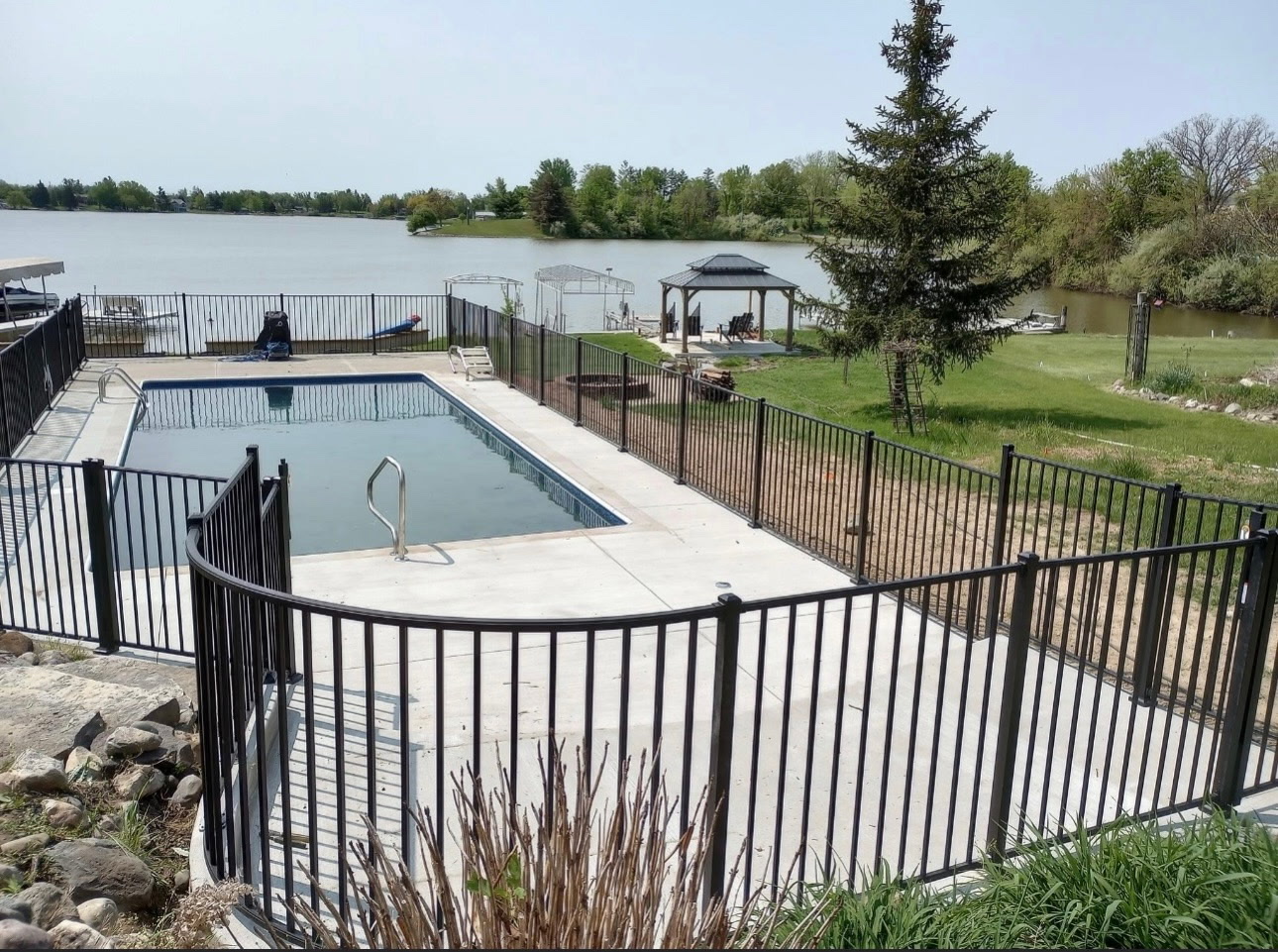
Lakefront Deck Railing and Shoreline Fence at Lake Tippecanoe
Lake Tippecanoe in Kosciusko County puts more stress on fencing and railing than almost any other environment in Northern Indiana. The combination of constant humidity, ice movement in winter, and direct water contact on the shoreline side chews through standard materials faster than most homeowners expect.
This property needed deck railing on an elevated dock-level deck and shoreline fencing along 40 feet of waterfront. The previous wood railing had lasted about eight years before rot made it unsafe.
The Problem with Standard Materials at Lakefront Properties
Wood railing near water looks good for a few years. Then the end grain starts absorbing moisture, the posts soften at the base, and the balusters start pulling loose. By year six or seven, most lakefront wood railings in Northern Indiana are a maintenance project. By year ten, they’re a replacement project.
Aluminum corrodes in the presence of tannins and organic compounds common in lake water. Standard vinyl without internal reinforcement can flex and bow when long sections are exposed to direct heat and humidity.
The right answer for Lake Tippecanoe is aluminum-reinforced vinyl. It combines the moisture resistance of vinyl with the structural rigidity of aluminum at the post and rail level. We cover how different materials handle Northern Indiana’s lakefront conditions in our fence material selection guide, and you can see the full range of what we do on our lakefront specialty page and deck and railing page.
What We Installed at Lake Tippecanoe
We ran 80 feet of aluminum-reinforced vinyl railing along the deck perimeter at 42-inch height. The deck elevation required stair sections at two points, both with continuous rail grabs down the run.
The shoreline section was 40 feet of vinyl fence at 4 feet high with a lockable gate providing access to the water. Posts on the shoreline side went 42 inches deep to account for bank erosion and the soft soil condition common at the water’s edge around Kosciusko County lakes.
How the Installation Worked
Lakefront jobs in Kosciusko County require more planning than standard residential installs. Access to the site, deck load ratings, and soil conditions at the water’s edge all matter.
Day one: removed the old wood railing and posts, assessed the deck structure for any needed repairs before new posts went in, and dug shoreline fence post holes by hand to avoid equipment near the bank.
Day two: set deck railing posts with structural anchors to the deck framing, began shoreline post installation in concrete with extra cure time for the softer soil.
Day three: completed rail runs on the deck, installed balusters, hung the shoreline fence panels, and installed the access gate with a rust-resistant marine-grade latch.
The stair sections required custom angle cuts on the rail. Both turned out clean.
What the Homeowner Got
The new railing and shoreline fence handles direct water exposure the way the previous wood never could. Aluminum-reinforced vinyl doesn’t absorb moisture, so there’s no rot cycle to manage. The posts on the shoreline section are set deep enough to stay put through winter ice movement.
The homeowner’s dock-level deck now has code-compliant 42-inch railing across the full perimeter, which also cleared a flagged item from a recent home inspection.
Area Wide Fencing & Deck Supplies has done lakefront work across Kosciusko County for over 15 years. Lake Tippecanoe, Lake Wawasee, Barbee Lake, Winona Lake. The material and installation requirements are different from a standard yard fence, and getting them right matters more when the environment pushes hard on everything you put in the ground.
If your lake property needs railing or shoreline fencing, see what we do on our lakefront specialty page. For other projects in the Warsaw and Kosciusko County area, our Warsaw fencing page has more detail on local requirements.
Frequently Asked Questions
What is the best railing material for a lakefront deck in Indiana?
Aluminum-reinforced vinyl is the best railing material for most lakefront decks in Indiana. It handles constant humidity and direct water exposure without rotting or corroding. Standard vinyl can bow in long runs; the aluminum reinforcement in the posts and top rail prevents this. Wood looks good initially but typically needs replacement within 10 years near water.
Does Indiana DNR have rules about shoreline fencing at Lake Tippecanoe?
Indiana DNR has shoreline protection rules that can affect fence installation within a certain distance of the water’s edge. Requirements depend on setback distance, fence height, and whether any land disturbance is involved. Area Wide Fencing handles permit research and coordination as part of all lakefront projects in Kosciusko County.
How deep should fence posts be set near a lake in Northern Indiana?
Near a lake, fence posts should go at least 36 to 42 inches deep. Soil near shorelines in Kosciusko County is often soft and subject to erosion, which means shallow posts move. At Lake Tippecanoe and similar lakes, we typically add 6 inches to standard depth recommendations and use a larger diameter post on the shoreline side.
What railing height is required for an elevated deck?
Indiana residential code requires a minimum 36-inch railing height for decks less than 30 inches above grade and 42-inch railing for decks 30 inches or more above grade. Most lakefront decks at Lake Tippecanoe are elevated enough to require the 42-inch standard. Area Wide Fencing installs to current code on all deck railing projects.
How long does lakefront railing and fencing installation take?
A project combining 80 feet of deck railing with 40 feet of shoreline fence typically takes 3 days. Lakefront jobs take longer than standard installs because of access constraints, soil conditions, and the need for careful post work near the water’s edge. Permitting adds time before installation starts, but we handle that process.
Ready to Start Your Project?
Get a free on-site estimate from Area Wide Fencing & Deck Supplies in Northern Indiana.