comparisons
Pergola vs. Gazebo for Northern Indiana Backyards
Compare pergolas and gazebos for Northern Indiana yards, including shelter, cost, permits, and everyday use.
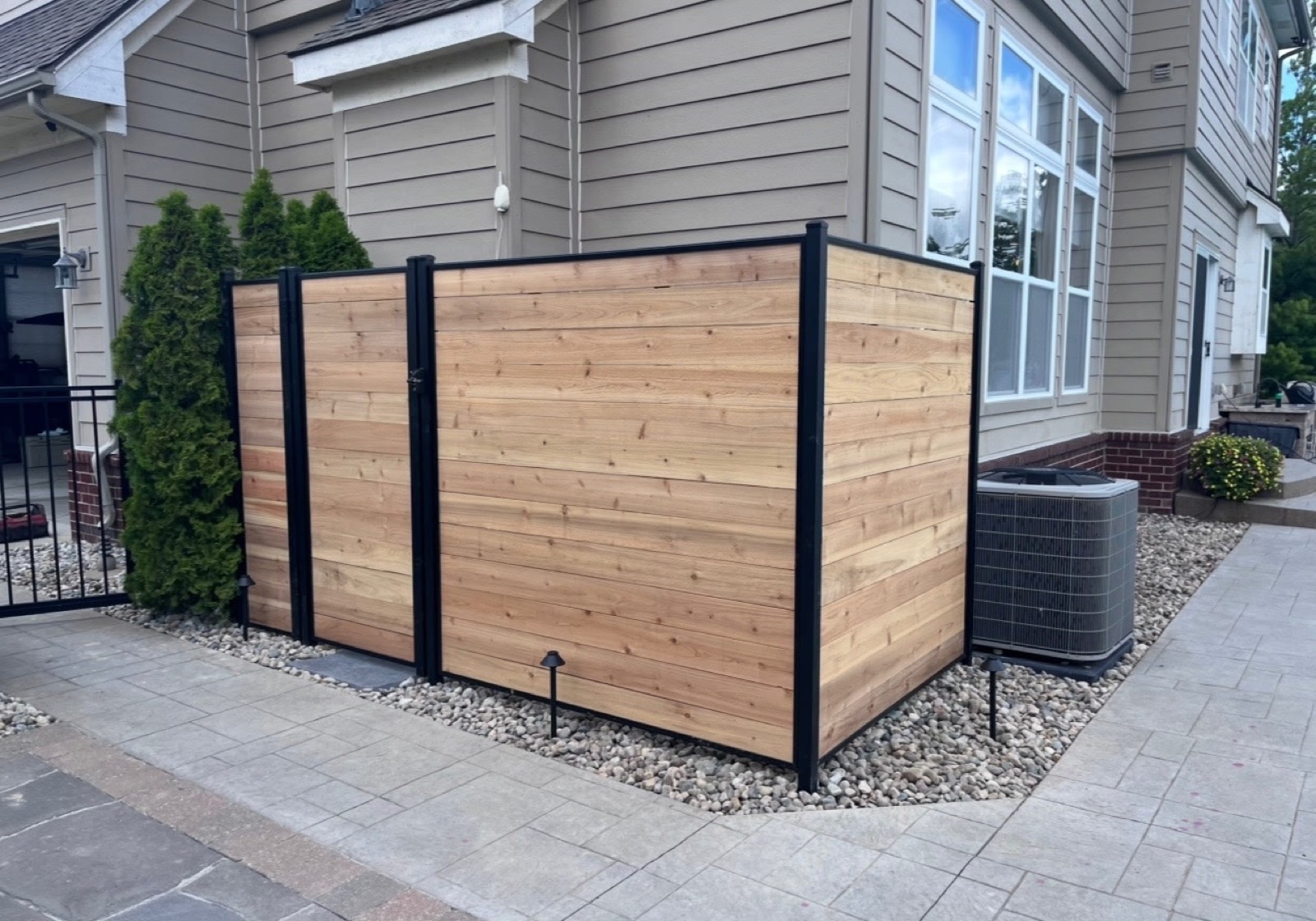
For most Northern Indiana properties the answer comes down to one question: do you want to see through the fence or not? If you want privacy, sound block from a road, or a yard your dog can’t see out of, vinyl is the material. If you need pool-code compliance, an ornamental front-yard look, or a fence that doesn’t kill the view off a lake, aluminum is the material. Same installer, two different jobs.
That framing matters because vinyl and aluminum get compared as if they’re competing for the same fence. They aren’t. Vinyl is a solid-panel privacy product. Aluminum is an open-picket ornamental product. The question isn’t which one is better. It’s which one fits what you’re actually trying to do.
We’ve installed both across Kosciusko, Marshall, Elkhart, and St. Joseph counties for over 15 years, on backyards in Warsaw, pool surrounds in Goshen, lakefront perimeters on Wawasee and Maxinkuckee, and commercial sites near South Bend. Here’s the comparison with real numbers, real code, and a clear recommendation.
Vinyl fencing is built as tongue-and-groove panels that sit between posts with no gaps. Stand on one side and you can’t see the other side. The whole point of the product is full visual screening, sound dampening, and a defined enclosure that contains kids, dogs, and noise.
Aluminum fencing is the opposite. It’s vertical pickets spaced about 4 inches apart with two or three horizontal rails between posts. You see through it from any angle. The point of the product is to define a boundary or meet a code requirement without blocking what’s on the other side.
This is why a vinyl pool fence and an aluminum pool fence solve different problems. They can both meet Indiana barrier code. But one gives you privacy with code, and the other gives you sightlines with code. Picking between them is a question of what you want the fence to do, not which material is “better.”
| Factor | Vinyl | Aluminum |
|---|---|---|
| Privacy level | Full visual screening | See-through |
| Installed cost per foot | $35 to $55 | $40 to $70 |
| Lifespan | 20 to 30 years | 30 to 40 years |
| Annual maintenance | Hose it down | Hose it down |
| Pool-code compliant | Yes, if height and gaps meet barrier spec | Yes, designed for it |
| Lets you see through | No | Yes |
| Lakefront friendly | Yes, especially for privacy | Yes, especially to keep the view |
| Dog containment | Excellent, solid panel, hard to climb | Good for medium and large dogs, not ideal for small dogs that can fit between pickets |
| Sound dampening | Meaningful for road noise and neighbor noise | Minimal, air passes straight through |
| HOA-typical approval | Common in newer subdivisions, sometimes restricted in older ones | Black aluminum is the closest thing to a default-approved product across Northern Indiana |
| Weight | Light to medium | Light |
| Individual panel replacement | Yes, panels and pickets are individually replaceable | Yes, panels and pickets are individually replaceable |
| Warranty | Lifetime limited manufacturer warranty on quality lines | Lifetime limited manufacturer warranty on quality lines |
A few of those rows deserve more than a cell of text. The pool code question and the cost question get full sections below.
Pick vinyl fencing when the job is privacy, containment, or sound control. The clearest cases:
Backyard privacy. This is the most common job we do in residential Northern Indiana. A 6-foot vinyl privacy panel between you and the neighbors gives full screening, holds up for 20 to 30 years, and asks for nothing after install day. Around Warsaw, Goshen, and Plymouth, this accounts for the bulk of our residential work.
Dog yards. Solid panels mean your dog can’t see other dogs, the mailman, or the kid on a bike, which removes most of the trigger for fence-line barking. The smooth surface is hard to climb. For diggers, we can bury the bottom rail or add a concrete kick plate. Vinyl is the dog-owner’s material.
Pool surrounds where you want privacy AND code. Most pool fences in this region are aluminum, but vinyl works if you want the pool screened from neighboring yards. The fence has to hit barrier-code height, picket-gap, and gate-hardware requirements, which we’ll cover in a minute. If you want privacy around the pool, vinyl does it. If you want to see the pool from the kitchen window, it doesn’t.
HOAs that approve solid panel. Many subdivisions in the Warsaw and South Bend suburbs approve white or tan vinyl privacy fence as a default. If your HOA has a list of approved styles and vinyl privacy is on it, that’s usually the path of least resistance.
Sound dampening from a busy road. A solid 6-foot vinyl fence between your yard and a county road or a state route knocks down road noise by a real amount. It’s not soundproofing, but it’s a noticeable difference when you’re sitting on the back deck. Aluminum does almost nothing for sound because the air passes straight through.
Pick aluminum fencing when the job is visibility, ornamental presence, or pool code. The clearest cases:
Pool surrounds where you want to see the pool. This is the single most common reason we install aluminum. Indiana barrier code requires a fence around any in-ground or above-ground pool, and aluminum is the standard product for it because you can see the pool from the house. Black aluminum disappears against landscaping and reads as the wrought-iron look most homeowners want.
Ornamental front yards. A 42 or 48-inch black aluminum fence along a front-yard property line gives the wrought-iron aesthetic without the rust, the painting schedule, or the wrought-iron price tag. In older Goshen and Plymouth neighborhoods where solid privacy panels look out of place, ornamental aluminum fits the architecture.
Commercial perimeter. Heavier-gauge aluminum at 60 to 96 inches works as security fencing for industrial parcels, schools, storage yards, and similar sites. It’s faster to install than wrought iron, costs less, and holds its finish for decades. Our commercial fencing work uses aluminum for most ornamental-grade perimeter jobs.
Properties with a view to preserve. This is the lakefront case, the hillside case, and the open-country case. If you have a reason to look at what’s on the other side of the fence, a solid vinyl panel is the wrong material. Aluminum gives you a defined boundary that doesn’t take away the view you bought the property for.
Wrought-iron look without the rust. Real iron rusts, needs repainting, and costs 40 to 50 percent more installed than aluminum. Powder-coated aluminum gives you 95 percent of the same look and holds its finish for 20 to 30 years in full Indiana sun. For almost every residential application, aluminum is the better practical choice.
Pool fences are where this comparison gets concrete, so it’s worth covering on its own. Indiana follows the 2015 IRC barrier code, and most municipalities in Kosciusko, Marshall, and Elkhart counties enforce the same baseline:
Both vinyl and aluminum can meet all four. Aluminum is the more common choice because the open-picket profile lets you see the pool from the house, which matters for both supervision and enjoyment. Aluminum pool-code product lines ship with hardware that meets the code out of the box. Some local Authorities Having Jurisdiction also want a final inspection before the pool is filled, which we plan around when scheduling.
Vinyl pool surrounds are less common but absolutely valid. They work when the homeowner specifically wants privacy around the pool. A vinyl privacy panel at 60 or 72 inches with code-compliant gate hardware meets the barrier requirement and gives you a screened pool area. The trade-off is you can’t see the pool from the kitchen window. For families with young children that’s often a dealbreaker. For empty-nesters who want a private hot tub surround, it’s the right call.
Vinyl runs $35 to $55 per linear foot installed across Northern Indiana. Aluminum runs $40 to $70. So on day one, vinyl is the cheaper material per foot.
The lifespan numbers swing the other way. Quality vinyl runs 20 to 30 years. Quality aluminum runs 30 to 40. Run the numbers on a 200-foot perimeter:
| Material | Installed Cost (200 ft) | Annual Cost Over Lifespan |
|---|---|---|
| Vinyl ($45/ft midpoint, 25-year midpoint) | $9,000 | $360 per year |
| Aluminum ($55/ft midpoint, 35-year midpoint) | $11,000 | $314 per year |
The annual cost is within $50 of each other. That’s why we tell homeowners to pick the material based on what they want the fence to do, not based on which one is cheaper. Over the life of the fence, the difference is rounding error. Pick the material that fits the job.
The variables that move actual price more than material choice: height, site conditions, soil type, slope, gate count, and post depth. A 6-foot vinyl on rocky clay with two gates can cost more than a 48-inch aluminum on level loam with no gates. We quote based on actual property measurements, not an online estimator.
Both materials work on lakefront installations. We’ve put both around Wawasee, Tippecanoe, Maxinkuckee, Bass, Webster, and Winona. The choice comes down to whether you’re protecting the view or protecting your privacy.
Aluminum is the more common lakefront pick because the slim picket profile doesn’t block the water view. On a $600,000 lake house, the view is the asset. A solid vinyl panel along the back property line would block exactly what the homeowner paid for. Black aluminum at 48 to 60 inches defines the boundary without taking away the sightline.
Vinyl makes sense on lakefront when privacy from the neighboring cottage is the priority. On lots where cabins are 30 feet apart, a 6-foot vinyl privacy panel between you and the next dock matters more than a clear view of the side neighbor’s yard. We’ve installed plenty of vinyl side-yard runs on Syracuse Lake and Bass Lake for exactly that reason.
Both materials handle the moisture, the humidity, and the freeze-thaw cycles that come with shoreline living. Posts get set below the 36 to 42-inch frost line either way. On open-water lots, we step up to heavier-gauge pickets and reinforced posts on both products to handle the wind load.
Across our typical residential year, the split runs roughly 70 to 80 percent vinyl for backyard work, with aluminum taking the pool surrounds, the front-yard ornamental jobs, and the commercial perimeters. The reason isn’t that vinyl is better. It’s that more homeowners are buying privacy fences for back yards than ornamental fences for front yards.
Inside the aluminum work, pool surrounds account for the majority. A typical week in summer sees more pool-code aluminum than any other single product in our schedule. Front-yard ornamental and commercial work fills in the rest.
If you’re stuck between the two, the question is almost always answered by the application. If you’re standing in the backyard trying to figure out which one to put up between you and the neighbor, the answer is vinyl. If you’re standing next to a new pool trying to figure out what’s going around it, the answer is almost certainly aluminum. The cases where it’s genuinely a coin flip are rare.
For a related comparison on the wood-versus-vinyl question, see our piece on vinyl vs wood in Indiana winters.
Three questions cut through the noise:
Do you need to see through the fence, or do you need it to block sight? See through, aluminum. Block sight, vinyl. That single question answers most of these decisions.
Is the fence around a pool? If yes, aluminum is the default unless you specifically want privacy at the pool, in which case vinyl works at the right height with code-compliant hardware.
What’s the house and neighborhood look like? Older neighborhoods and ornamental architecture want aluminum. Newer subdivisions and standard residential lots want vinyl.
If you’re still not sure, that’s what the estimate is for. We’ll walk the property, look at the application, check the HOA rules, and give you a straight recommendation. No upsell to the more expensive material, no “well, it depends” hedge. The right answer is usually obvious once we see the lot.
See our vinyl fencing options, see our aluminum fencing options, or request a free estimate for your property. We cover Kosciusko, Marshall, Elkhart, St. Joseph, Fulton, Starke, and Pulaski counties, plus the lake communities around Wawasee, Tippecanoe, Maxinkuckee, Bass, Webster, and Winona.
Vinyl is cheaper per linear foot installed, running $35 to $55 in Northern Indiana versus $40 to $70 for aluminum. Over the full lifespan of each material, the annual cost works out within about $50 of each other, so cost shouldn’t be the deciding factor.
Yes, if it meets barrier code. Indiana pool code requires at least 48 inches in height, picket or panel design that won’t pass a 4-inch sphere at the base, no climbable rails between 45 inches, and self-closing self-latching gates that open outward from the pool. Vinyl privacy panels can meet all of those requirements.
Visibility. Open-picket aluminum lets you see the pool from the house, which matters for supervision and enjoyment. Aluminum pool-code product lines also ship with hardware that meets the 2015 IRC barrier requirements out of the box, so there’s no retrofitting after inspection.
Aluminum, by about 10 years on average. Quality vinyl runs 20 to 30 years in Northern Indiana conditions. Quality powder-coated aluminum runs 30 to 40 years. Both are individually-replaceable systems, so damaged panels can be swapped without rebuilding the whole fence.
It depends on whether you want to preserve the view or block sightlines from neighbors. Aluminum is the more common pick because the slim profile doesn’t block the water view. Vinyl makes sense on lakefront when the priority is privacy from a closely-spaced neighboring cottage.
Most HOAs in the Warsaw, Goshen, Plymouth, and South Bend areas approve at least one of the two. Black aluminum is the closest thing to a default-approved product across Northern Indiana subdivisions. White vinyl is widely approved in newer subdivisions but sometimes restricted in older neighborhoods. Always check before scheduling.
Compare pergolas and gazebos for Northern Indiana yards, including shelter, cost, permits, and everyday use.
Contact Area Wide Fencing for a free on-site estimate in Northern Indiana.