guides
Vinyl Fence Cost in Northern Indiana
Installed vinyl fencing in Northern Indiana usually runs $35 to $55 per linear foot, depending on style, height, gates, and site conditions.
The short answer: most Northern Indiana homeowners need a 6-foot vinyl privacy fence for the backyard and a 3 to 4-foot picket or decorative vinyl fence for the front. Lake lots usually want semi-privacy. Rural acreage usually wants ranch rail. That covers four out of five properties we quote.
The longer answer is where this guide earns its keep. Vinyl fencing isn’t one product. It’s five distinct style categories, and picking the wrong one for your lot means you either spend too much, get stuck with something an HOA rejects, or end up with a fence that doesn’t actually do what you wanted it to do.
I’ve installed all five styles across Kosciusko, Marshall, Elkhart, and St. Joseph Counties for 15 years. Here’s how to figure out which one fits your property.
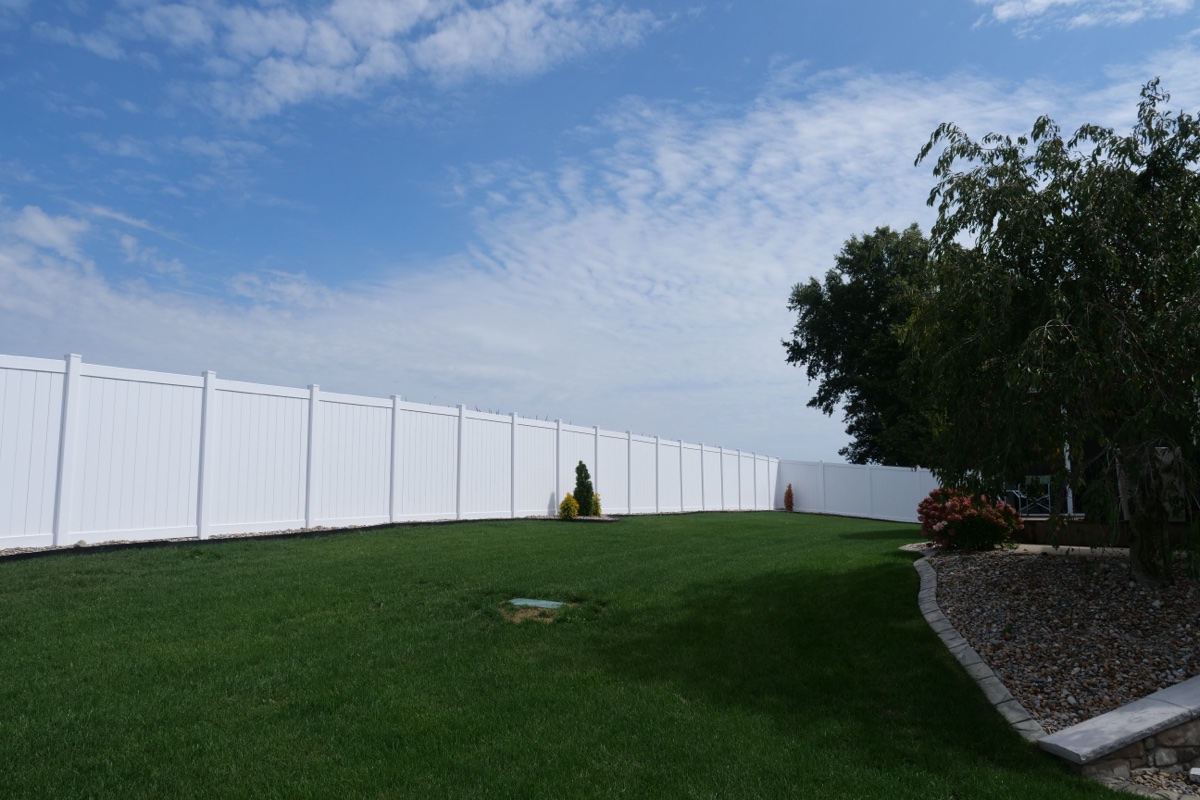
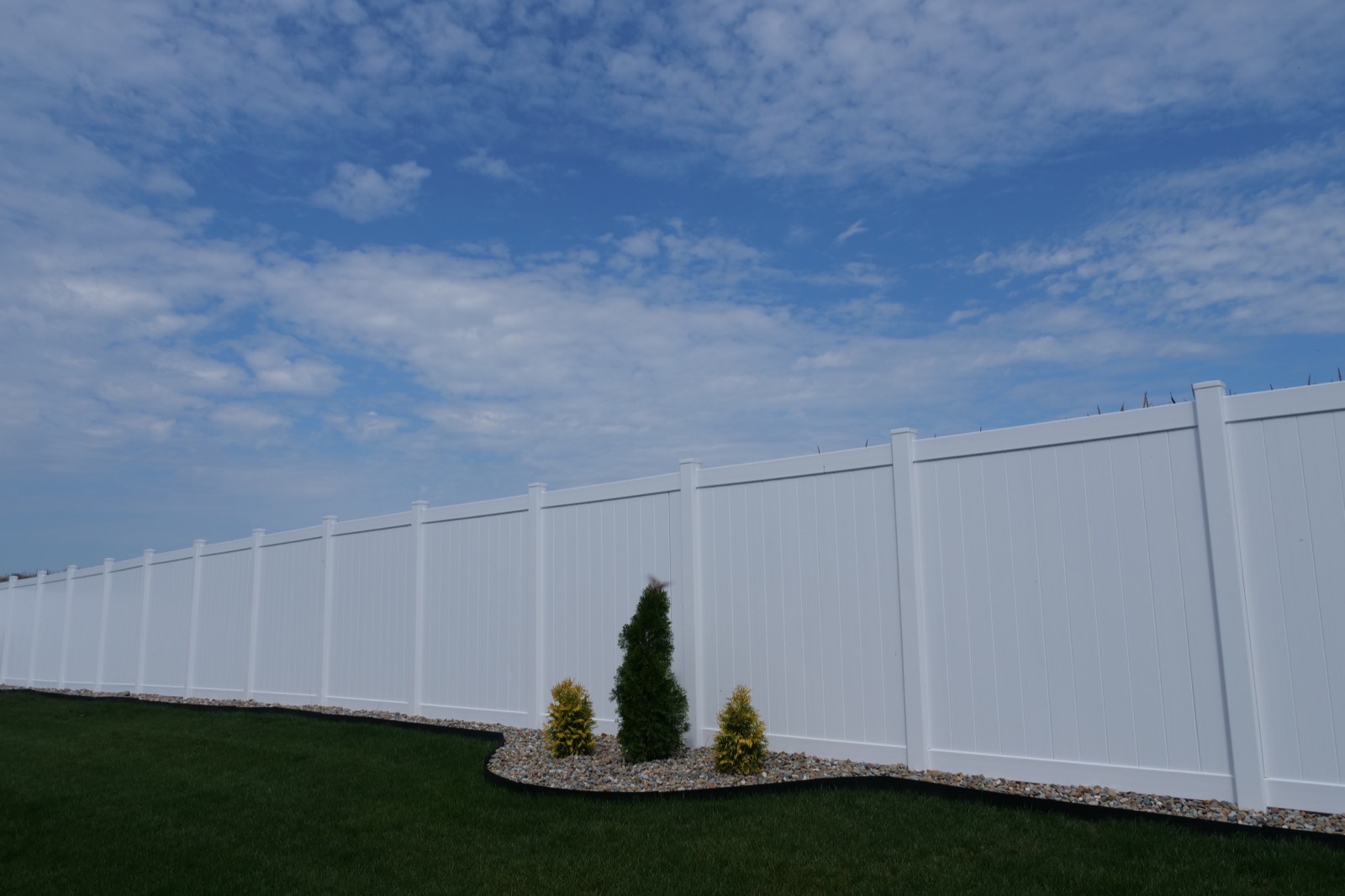
A vinyl privacy fence is a solid panel with no gaps between the boards, usually 6 feet tall, sometimes 8. You can’t see through it. That’s the whole point.
This is the most common vinyl style we install. If you have neighbors close on either side, a pool, a hot tub, dogs that bark at every passing car, or kids who don’t need an audience while they play in the yard, this is the fence. Tongue-and-groove pickets sit between routed 5x5 posts and lock into top and bottom rails. The result is a continuous wall of vinyl that does exactly what the name suggests.
Where it fits: Subdivision backyards in Warsaw, Plymouth, Goshen, and the South Bend suburbs. Anywhere you’d put a 6-foot wood privacy fence, vinyl works better. We covered the durability math in detail in our vinyl vs. wood comparison, but the short version is that wood needs staining every two to three years and vinyl needs a hose.
HOA approval: Almost always approved in white or tan. Some HOAs cap fence height at 6 feet in the rear yard, which is also the standard. A few restrict color to specific options. We’ve put these through enough subdivision review boards to know what flies.
Rough cost: $40 to $50 per linear foot installed for a standard 6-foot run. An 8-foot privacy fence with reinforced posts pushes higher because the material is heavier and the post footings go deeper. A 150-foot backyard enclosure typically lands between $6,000 and $8,000.
Where it doesn’t fit: Front yards in most Northern Indiana municipalities. Warsaw caps front-yard fence height at 4 feet, and a 6-foot privacy fence isn’t getting a permit there or in most of the surrounding cities. Open lakefront lots where wind load is a real concern, unless you step up to reinforced posts.
A vinyl picket fence is what most people picture when they hear the words “white picket fence.” Spaced vertical boards, 3 to 4 feet tall, with rounded, flat, or pointed tops.
The function is different from privacy. A picket fence doesn’t block sightlines. It defines a property line, keeps a small dog in, marks the front yard as yours, and adds curb appeal. You’re meant to see through it.
Where it fits: Front yards across older neighborhoods in downtown Warsaw, Goshen, Plymouth, and the historic streets in places like Culver and Bremen. The traditional look pairs with houses built before 1970 in a way that a 6-foot privacy panel never will. We’ve installed picket runs along sidewalks in neighborhoods where every other house has the same general aesthetic, and vinyl picket disappears into that visual context.
HOA approval: High. Picket fences are the easiest style to get approved because they don’t block neighbor sightlines or change the streetscape much. White is the safest color submission.
Rough cost: $30 to $40 per linear foot installed. Less material per foot than privacy, so it comes in cheaper even at the same length. A 100-foot front-yard run typically lands around $3,500.
Real example: Last summer we installed about 80 feet of 4-foot white vinyl picket along the front and one side of a 1920s craftsman near downtown Warsaw. The owner wanted curb appeal and a barrier for a small terrier. Five hours of crew time across two days. The fence will look the same in 20 years.
Semi-privacy vinyl uses tongue-and-groove or shadowbox construction with narrow gaps between pickets. You get most of the visual block of a full privacy fence with air movement through the panel.
This is the smartest style for two specific situations: lakefront lots where you want privacy from the neighbor but don’t want to kill the breeze coming off the water, and any property where wind load is a real factor. A solid 6-foot privacy fence is a sail. Semi-privacy lets the wind pass through.
Where it fits: Lakefront properties on Wawasee, Tippecanoe, Maxinkuckee, Bass, Webster, and Winona. Side yards on subdivision lots where airflow matters for a vegetable garden or pool deck. Hilltop properties west of Warsaw where afternoon wind is constant. We see this style more on lake jobs than anywhere else.
HOA approval: Generally good. Some lake associations specifically prefer semi-privacy over solid panel because it preserves shared sightlines to the water. Worth checking your association rules before committing.
Rough cost: $40 to $50 per linear foot installed, similar to privacy. The material savings from the gaps are offset by tongue-and-groove or shadowbox construction being slightly more involved than straight tongue-and-groove privacy.
Where it doesn’t fit: Properties where you genuinely need to block all sightlines. If a neighbor’s deck looks directly into your hot tub, semi-privacy isn’t enough. Go full privacy.
Ranch rail vinyl is horizontal rails between posts with no infill. Three or four rails, spaced evenly, running along the length of the property line.
This is the right style for rural acreage in Marshall, Fulton, Kosciusko, and the back roads of Elkhart County. It’s not trying to provide privacy or security. It defines a property line, contains large animals when paired with mesh backing, frames a long driveway, or just adds visual structure to a lot that would otherwise look unfenced from the road.
3-rail is for property definition, decorative perimeter, and large dogs. 4-rail tightens the spacing enough to work for horses, cattle, and smaller livestock when you add a layer of woven wire mesh behind the rails. The mesh keeps animals from slipping between the rails or pushing through.
Where it fits: A 40-acre horse property east of Pierceton. The half-mile driveway running to a house off County Road 700 outside Plymouth. The front 200 feet of a 5-acre rural homestead near Bourbon. Any property where the visual goal is “country,” not “subdivision.”
HOA approval: Not usually a factor because most rural acreage isn’t under an HOA. On the rare HOA-governed acreage, ranch rail is almost always approved because it doesn’t block views or change the rural character.
Rough cost: $25 to $35 per linear foot installed for 3-rail. 4-rail with mesh backing runs higher, roughly $35 to $45 per foot once you add the wire and the labor to tension it. Ranch rail is the cheapest vinyl style per foot, but you usually need a lot more of it. A 1,000-foot perimeter is normal.
Why vinyl over wood for ranch rail: Wood ranch rail is a fine look when it’s new. By year 5 in Indiana weather, the rails warp, the posts soften where they meet the soil, and you’re replacing sections every spring. Vinyl ranch rail looks the same in year 15 as it does in year one. For owners who don’t want to spend weekends repairing fence, it’s an easy call.
Decorative vinyl is privacy or picket panels with a shaped top rail or open lattice section above the main panel. Two main variations: scalloped tops that curve down between posts for a softer look, and lattice tops that add 6 to 12 inches of decorative openwork above a solid panel.
This is the style for properties where a flat-top privacy fence looks too utilitarian. Garden enclosures, courtyards, patio surrounds, smaller backyards where the fence is going to be seen from the house every day and you want it to look intentional rather than functional.
Where it fits: A garden enclosure off the back of a Goshen craftsman. A patio surround on a Winona Lake cottage. Smaller subdivision backyards in Plymouth and Bremen where the fence is part of the landscape design, not just a barrier. We installed a scalloped-top privacy run last fall around a kitchen garden on a property near Syracuse. The owner wanted privacy from the road but didn’t want the back of her yard to feel walled-in. Scalloped solved it.
HOA approval: Usually approved when the underlying panel is approved. Lattice tops sometimes get pushed back if they exceed the HOA’s max fence height. Scalloped tops are nearly always fine because the panel height drops between posts, not rises.
Rough cost: $45 to $60 per linear foot installed. The shaped top rail and lattice sections add labor and material over a flat-top run of the same height. Worth it when the fence is going to be a visible part of your outdoor space.
Where it doesn’t fit: Long perimeter runs where the decorative detail won’t be appreciated, or properties where pure function (containment, security, full privacy) is the only goal. Save the decorative panels for the parts of the fence people actually look at.
The five styles cover different jobs. Match the style to the job and the answer is usually clear.
Start with what the fence has to do:
Then check the constraints:
Budget for the actual run, not the per-foot number: A 150-foot backyard privacy fence at $45 per foot is $6,750. Add a 4-foot walk gate ($300 to $450) and a double drive gate if you need one ($1,200 and up). Hilly lots need racked panels and add labor. Trees in the way cost extra to work around. The base per-foot number is the start, not the finish.
Replaceability is part of the value. Vinyl is built so individual pickets, rails, and full panels can be pulled and replaced without disturbing the surrounding fence. A lawnmower-thrown rock that cracks one picket isn’t a $5,000 problem. It’s a 30-minute fix. That’s a feature wood doesn’t share.
We walk every quote on-site. That means looking at the soil, the grade, the property lines, the neighbor situation, the wind exposure, and what the fence is actually being asked to do. The recommendation comes from the property, not from a catalog.
If you want to see our full vinyl product line, the vinyl fence page covers styles, colors, profiles, and the local considerations that affect what we install. Contractors and DIY-pro buyers sourcing materials directly should look at our wholesale division for pickup at our Warsaw yard.
When you’re ready for a real number on your property, request a free quote. We’ll measure the run, check the conditions, and tell you which of these five styles makes sense for what you’re trying to do. No pressure, no upsell. Just the right fence for your lot.
For the full picture on how vinyl handles our climate compared to other materials, the vinyl fencing service page and the vinyl vs. wood guide both go deeper on the durability side.
Installed vinyl fencing in Northern Indiana usually runs $35 to $55 per linear foot, depending on style, height, gates, and site conditions.
Contact Area Wide Fencing for a free on-site estimate in Northern Indiana.